

Tech interview prep: mock interviews, résumé and LinkedIn from a hiring manager
Role-specific mock interviews with real scoring, a résumé that gets past ATS filters, and a roadmap for what to fix before the real thing.
Book a callOr send me the detailsChoose your prep package
Quick-fire mock interview
- Role-specific technical and behavioral mock interview
- Real-time scoring and on-the-spot coaching
- Verbal feedback on strengths and red flags
- PDF scorecard and improvement checklist
Résumé and mock interview
- ATS-optimized résumé rewrite with quantified wins
- Full 45-minute mock interview, tech and culture fit
- Written debrief with STAR-method answer samples
- 72-hour résumé turnaround and one free revision
Complete visibility upgrade
- LinkedIn and portfolio overhaul for recruiter search
- Deep-dive résumé rewrite and cover-letter template
- 60-minute extended mock interview and success roadmap
- Bonus 15-minute follow-up call before your real interview
How it works
1. Book
Pick a package and a time on my calendar.
2. Share your target role
Send your résumé and the job description you are going after.
3. Mock interview
We run it live, scored against the role, with coaching as we go.
4. Fix and repeat
You get the written feedback and a short list of what to change before the real interview.
Interested in the consulting side instead? See marketing automation and lead tracking or WordPress speed and security.
What we cover in a session
A mock interview only helps if it feels like the real one. I run it against the actual job description you send me, ask the questions that role is likely to get, and stop to coach when an answer goes sideways.
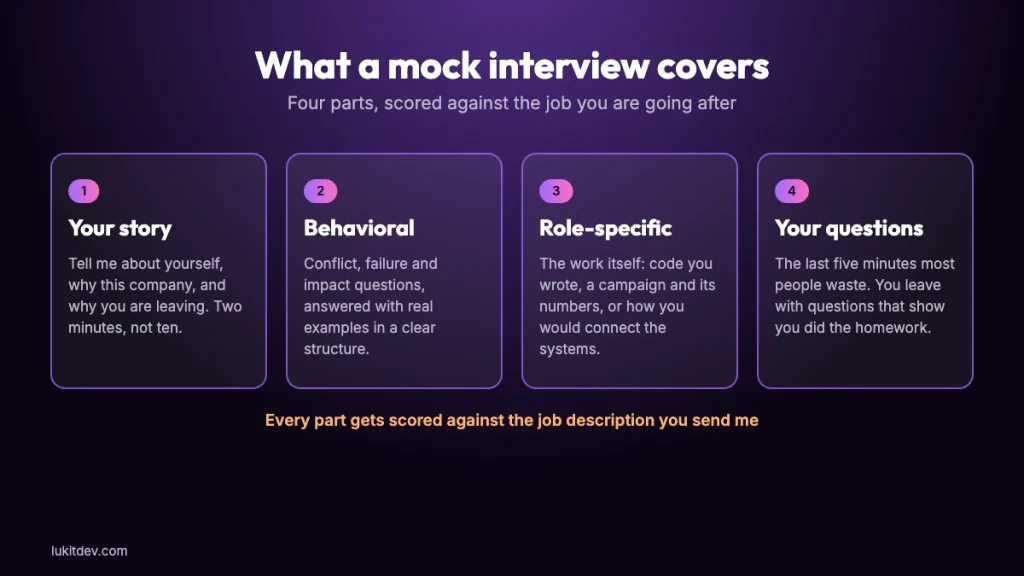
Your story. "Tell me about yourself", "why this company" and "why are you leaving" set the tone for everything after. We get each one down to a clear two minutes.
Behavioral questions. Conflict, failure, impact and influence. You pick real examples, and we shape them so the situation is short and the result is clear.
Role-specific questions. The work itself: code or a system you built, a campaign and the numbers behind it, or how you would connect a CRM, forms and analytics so a team can see what is working.
Your questions for them. The last five minutes are where many people go flat. You leave with questions that show you understand the team and the work.
Roles I prep people for
I have spent more than eight years in digital, web and marketing technology roles, from project management to running websites and managing the agencies that work on them. These are the interviews I know best:
- Marketing operations and marketing technology: CRM, automation and attribution, and the "walk me through how you would set this up" questions.
- Web development and WordPress: code and architecture walkthroughs, debugging stories, and how you explain trade-offs to people who are not technical.
- SEO, growth and digital marketing: campaigns, tests and the results behind them.
- Digital and technical project management: scope, deadlines, stakeholders, and what you did when a project went off track.
If your role is close to one of these, we will be fine. If it is far outside them, tell me when you book and I will say honestly whether I am the right person.
What I score you on
Every answer gets scored on the same five things an interviewer is quietly judging.
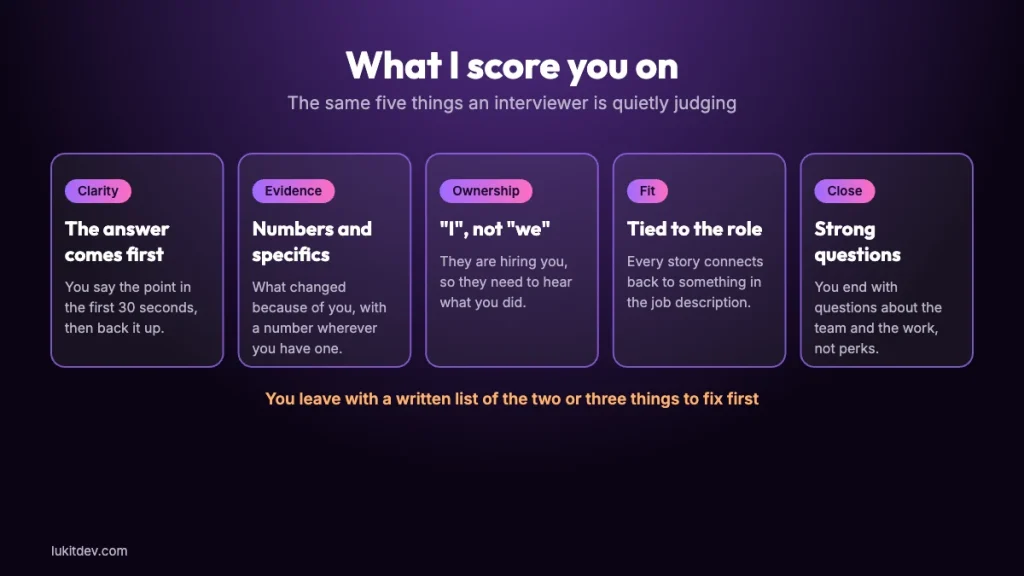
The scores are not the point. Most people have two or three habits that cost them in almost every answer, and the written feedback names those first. Fix them and the rest gets easier.
The mistakes I see most often
- Answers that run long. Past two minutes, the interviewer stops listening. Lead with the result, then tell the story behind it.
- "We" all the way through. Teamwork matters, but they are hiring you. Say what you did.
- No numbers. "Improved conversions" is forgettable. A specific before and after sticks. If you do not know the exact figure, give a range you can defend.
- Skimming the job description. The posting tells you what they will ask about. Most people read it once.
- Nothing to ask at the end. "I think you covered everything" ends the conversation on a flat note.
I wrote more about why practice works in my complete guide to mock interviews.
In English or Spanish
I am bilingual, so we can run the session in English, in Spanish, or switch between them. That helps if you are interviewing for a bilingual role, or if you want to practice in the language you are less comfortable in.
Questions I get asked
Who is this for?
Developers, marketers and marketing operations people moving into or up within tech roles.
What do I need to send before the session?
Your résumé, the job description, and the date of your real interview if you have one. If you do not have a posting yet, send two or three you like and I will build the questions from those.
How far ahead should I book?
About a week before the real interview is ideal, so there is time to fix what we find. The quick-fire round also works a day or two before as a warm-up.
Can we do the session in Spanish?
Yes. Sessions can run in English, Spanish or both.
What if I do not feel more prepared?
If you do not feel measurably more interview-ready after our session, tell me and I will make it right.
Can I book more than one session?
Yes. Most people book a quick-fire round before the real interview.
